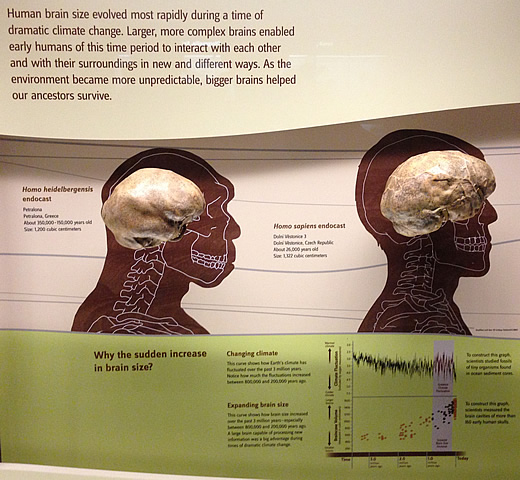
The Ultimate Irony of Climate Change: Before We Created It, It Created Us

human_brain_size

The picture above was taken at one of the best exhibits I’ve ever seen in any museum: the Hall of Human Origins at the Smithsonian National Museum of Natural History. The chart in the lower right-hand corner shows the correlation between brain size in humans and drastic changes in climate with an emphasis on the period between 800,000 and 200,000 years ago. (A nicer version of this chart is available on the exhibit’s website.)

It makes perfect sense that greater intelligence (as evidenced by larger brains) proved advantageous during times of unpredictable weather since the more humans were able to plan ahead, communicate, and work collaboratively, the more likely they were to survive. In fact, I’ve even read that the cranial capacity of fossilized skulls gets larger the further away from the equator they occurred, suggesting a correlation between larger brains and harsher weather. In other words, in terms of natural selection, everything here appears to be in perfect working order.

But while there are no surprises in the relationship between brain size and climate change, there certainly is plenty of irony. The eventual result of all of that hard-fought intelligence were both the agricultural and industrial revolutions — precisely the technological advances that are most closely associated with modern climate change. Therefore, one could theorize that surviving rapid climate change bestowed upon humanity just enough intelligence to create even more rapid and dangerous climate change. One might even go so far as to say that the human brain is attempting to self-perpetuate continued growth.

I’ve read conflicting predictions of how this latest wave of climate change will ultimately affect brains size. Since equatorial temperatures will continue to expand latitudinally, it’s possible that the human brain could suddenly stop growing; on the other hand, due to all the challenges humanity faces as a result of rapid climate change, the size of our brains could continue to grow — perhaps at an even faster pace. Personally, I’m hoping for a future where we learn to use technology, intelligence, and even a little empathy to finally take control of our own evolutionary paths. Although it’s a little late for me to be genetically engineered, I wouldn’t mind a few multi-core petaflop processors embedded in my brain and at least one robotic arm.

The Miniaturization of Warfare

wmd_world_map

Growing up in the 80s, we were taught to fear a nuclear attack by the Soviet Union. Today, I think it’s fair to say that most people believe cyberwarfare is probably a greater threat than a full-scale nuclear holocaust.

What many people don’t fully grasp about nuclear weapons (in particular, those who object to reducing our stockpiles) is that they constitute a tremendous expense without all that much benefit — primarily due to the fact that governments can’t actually use them. Whereas the U.S. currently deploys conventional weapons on a weekly and sometimes daily basis, it’s very difficult to imagine a scenario where the United States could justify launching a nuclear attack of even the smallest scale.

This concept is critical to the plot of my story The Epoch Index, and is probably best described by the following passage:

After centuries-old rivalries finally escalated into full-scale nuclear conflicts, the United Nations drafted and unanimously voted into effect a resolution unequivocally banning any sized nuclear arsenal anywhere on the planet. The U.S. and other early nuclear adopters were happy to back (and help enforce) the new international law, having long ago anticipated the nuclear backlash and invested heavily in Prompt Global Strike systems: networks of launch vehicles and hypersonic cruise missiles designed to deliver warheads filled with scored tungsten rods twice as strong as steel and capable of ripping any structure anywhere on Earth to shreds in less time than it takes to have a pizza delivered. Thermonuclear hydrogen bombs were old news, as far as most world powers were concerned. The only reason to unleash 50 megatons of destruction is if you have very little faith in the accuracy of your delivery mechanisms. Modern weaponry can target down to the square centimeter, and since it uses real time topographical guidance, it can do so even when your entire GPS satellite network is compromised. Besides, what’s the point of defeating another nation if your great grandchildren can’t even set foot in it, and just about everything worth looting, pillaging, or oppressing is either incinerated or radioactive? Nuclear weapons are clumsy and inelegant. High-tech conventional is the new thermonuclear. Modern militaries say less is more.

In my upcoming novel Kingmaker, drones are a central theme:

It wasn’t special operations teams that concerned him; he was confident he could see a takedown coming in plenty of time, and even if he didn’t, he probably stood as good a chance of walking away from a team of Navy Seals as any one of the Seals themselves. What Alexei feared was death from above. With a well coordinated drone strike, you were simply there one moment, and everywhere but there the next. It didn’t matter how quick you were, or how smart, or how well trained. If you were on the CIA’s radar, they knew how to get you off of it and still be home in time for dinner and to kiss the kids goodnight. All it cost them was barely an hour’s worth of classified paperwork that everyone already knew would never see the inside of either a civilian or military courtroom.

As a deterrent, maintaining a nuclear arsenal equal to (or slightly greater than) those of one’s rivals still makes some strategic sense, however the reality is that weapons which can be relatively inexpensively and surreptitiously deployed are far more menacing than weapons that everyone knows you cannot actually use. In other words, the world has much more to fear from weapons that can — without due process — target buildings, vehicles, and even individuals than indiscriminate warheads that can destroy entire cities.

Just as in the world of technology, we are now witnessing the miniaturization of warfare.

The Soviet’s Obsession with Venus

venera_pin

Since information didn’t exactly flow freely between the United States and the Soviet Union during the Cold War, it isn’t widely known that the Soviets took quite an interest in Venus in the 1960s, 70s, and 80s. In fact, thirteen Venera probes (Venera is the Russian name for Venus) successful transmitted data from the atmosphere of Venus, and ten probes successfully landed on the planet’s surface. It’s easy to be somewhat dismissive of the Venera missions today until you consider how long ago it was that the Soviets were pulling this kind of thing off, and the fact that the pressure on the Venusian surface is 92 times that of Earth’s. (The longest any of the probes survived was two hours with the earliest spacecrafts being destroyed in only about 23 minutes.)

The Soviets accomplished several firsts with the Venera missions including:

  • The first man-made device to enter the atmosphere of another planet.
  • The first soft landing on another planet.
  • The first probes to return images, radar maps, and even a sound recording from another planet.

The pin in the picture above was created by the Soviet Union in 1961 to commemorate the initial Venera 1 mission. It was an incredibly thoughtful gift from my publisher (47North) after the release of my novel Containment in which Venus plays a key role. (They also gave me a bottle of tequila, but that’s a different story.)

Venera 1 successfully launched on February 12th, and successfully transmitted data back to Earth on three different occasions. However, the fourth telemetry session was a failure, and the probe was essentially lost — probably due to the overheating of a solar-direction sensor.

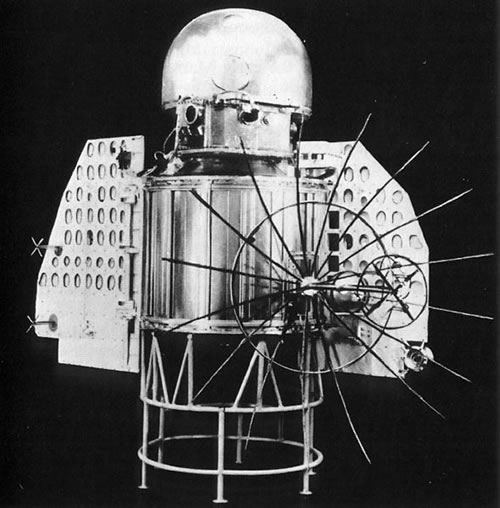
Below is a picture of Venera 1 which I think has a great retro look to it. One could even be forgiven for mistaking the interplanetary probe for a Soviet robot assassin from an early James Bond film.

venera_1

Lego Monitor Stand

lego_monitor_stand_3

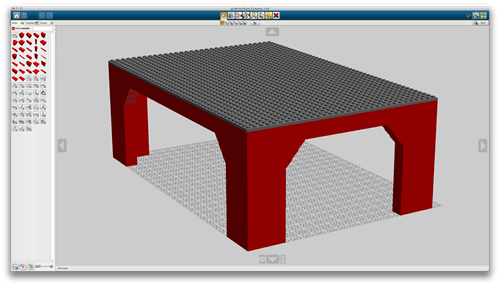
Last year, I decided to design and build a Lego monitor stand. Several people have asked me about it, so I figured I would finally post not just pictures, but the LXF (Lego Digital Designer) file, as well. If you want to play around with it, all you have to do is:

If you actually want to order the pieces to build the stand, I would not recommend doing so through the Lego Digital Designer tool. First of all, the auto-generated building guide is worthless, and the set is very expensive to order. Instead, I would recommend something like this:

lego_monitor_stand_1

lego_monitor_stand_2

Need Some Perspective? Ask a Taxi Driver.

taxi_200x184

Taxi drivers are among some of the most interesting people I come into contact with on a regular basis. Most of the drivers I encounter in the cities where I travel are immigrants, and many have unique and very interesting perspectives on the United States. While traveling last week, I had conversations with two such drivers which, together, I believe really capture the ethos of this country.

The first was a Russian Uber driver who was granted political asylum just before the collapse of the Soviet Union. He had nothing but positive things to say about the United States, unhesitatingly declaring it the best country in the world (the Canadian I was with took some exception which was duly noted). In over twenty-one years of living in the United States, he had not returned to Russia a single time, and had absolutely no intention of ever doing so.

The second good back-seat conversation I had was here in the Washington, D.C. area. It was with an Ethiopian who had been in the United States for eight years and was every bit as dismayed by this country as he was enamored. The school shooting in Connecticut was a big topic of conversation during my trip, but I don’t think I encountered anyone so upset by it as my driver. There was certainly plenty of killing in Ethiopia, he told me, but it could always be traced back to specific issues. The idea of killing simply for the sake of killing — shooting people with whom you had no quarrel whatsoever — was something he could not even begin to wrap his head around. I assured him that he wasn’t missing anything — that natively born Americans were no closer to understanding it than he was. The only difference was that we were growing accustomed to it.

I usually wouldn’t ask someone I just met what they hoped to do with the rest of their lives, but I’ve been fortunate enough to have several drivers volunteer their aspirations. I’ve heard some selfless and inspiring plans over the years from improving access to healthcare all over the world to trying to solve the problem of food distribution, but I found the simplicity and elegance of my Ethiopian driver’s dream to be particularly interesting. If he ever had enough money, he told me, every year, he would pick two people from every state in the country and send them on a two-week trip to Africa. That’s it. He would not require them to volunteer, and he would not ask anything of them in return. All he wanted them to do was spend two weeks on a sublime, culturally rich, and war-torn continent, then return to their normal lives. The rest, he told me, would take care of itself.

How the Chrome Dev Tools Got Me an Awesome License Plate

nbsp_license_plate

One of my favorite places in the world is the Udvar-Hazy Air and Space Museum (which is only about 15 minutes from my house), so when I saw that I could help support the Smithsonian with a custom license plate, I figured I’d give it a go. While I was at it, I decided to see if I could figure something out that would also symbolize one of my other passions: web development. It occurred to me that the perfect way to bring them both together would be the tag “&nbsp” which is the HTML entity code for “space” (technically, it’s “ ” but you can’t get a semicolon on a license plate, and most browsers don’t require it, anyway).

When I checked the plate online, I was both pleased and surprised to find that it was available, but after I started the registration and purchase process, I found out why. The DMV web application does not escape user input, so the character sequence “&nbsp” is always displayed as a literal space. I hoped I might still get away with it, however when I tried to submit the order confirmation form, I got a server-side error message explaining that the plate ” ” (empty space) was invalid.

Being the determined hacker that I am, I initially saved the source from the confirmation page, fixed the error by turning “&nbsp” into “&nbsp” (the character code for ampersand followed by “nbsp” — the proper way to escape user input in this case), and started working on tricking the DMV’s servers into believing that the form I was submitting actually came from them. But then it occurred to me that I could simply fix the DMV’s mistake using the WebKit Web Inspector. I opened up the awesome Chrome Dev Tools, made the change in the live page, and the form submitted perfectly. About two weeks later, my brand new plates arrived.

Thanks to the WebKit Web Inspector, the Chrome Dev Tools, and the openness and transparency of the web, I’m now rolling through Northern Virginia representing all my space-enthusiast and web-developer homies.

Proof I Sometimes Go Outside

I spend almost all my time working with, contemplating, or writing about technology, however I do occasionally get away from the computer. Now that the weather is getting cooler, I thought I’d reflect back on a few adventures we’ve had recently that were decidedly not technology related.

This is a blacktip shark I caught off the coast of Sandbridge, Virginia this summer. It was hard enough to pull in that I was thankful for the sudden rain that kept me cool. He was released completely unharmed right after the picture was taken.

blacktip_shark

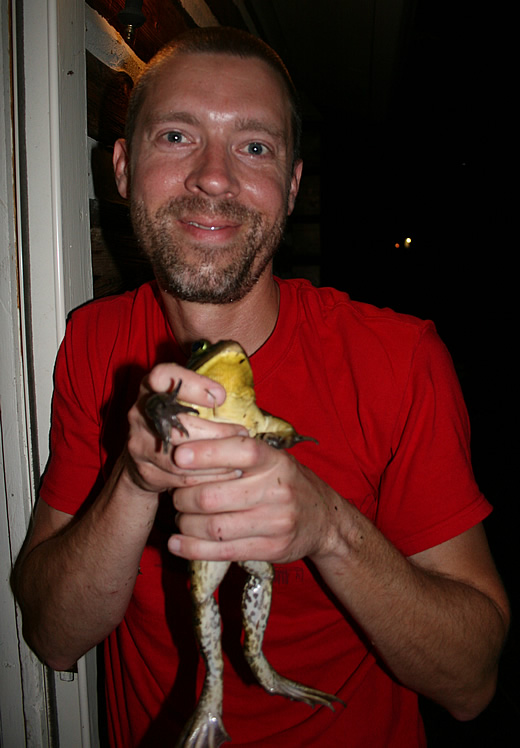
This is an American bullfrog I caught in a pond while on vacation. I had no idea how to catch a bullfrog, so I invented a method. I used a flashlight to spot and subsequently blind the frog while I got close enough to extend a fishing net with a three-foot handle above her. All I had to do then was startle her, and she leaped right into the net. Sounds easy, but it took me at least a dozen tries with as many different frogs. She was completely unharmed and released after a brief photo shoot.

american_bullfrog

This is probably one of the biggest northern water snakes I’ve caught. When distressed, they release a horrible musk which you will probably smell like for the rest of the day. They are also extremely vicious snakes. This one didn’t manage to bite me, but last year, I had a northern water snake tooth removed from my thumb.

northern_water_snake

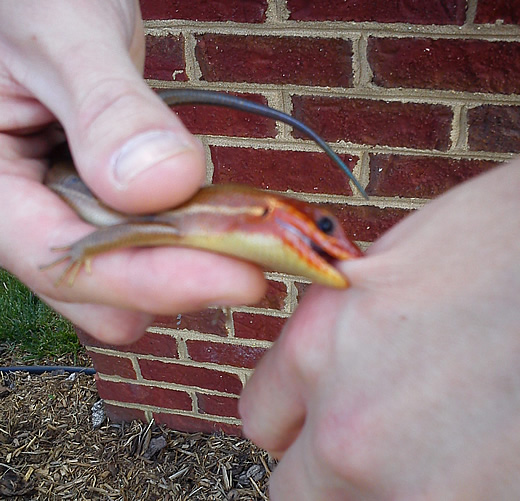
Another vicious but harmless reptile, this is a terrible picture of a broad-headed skink I grabbed in front of a friend’s house. He held on so tightly that I didn’t want to pull him off for fear of injuring him. I finally put my hand down on the ground and let go of him, and once he felt the ground beneath him again, he let go and took off.

broad_headed_skink

I have dozens of other photos that show I don’t spend my entire life in my basement office (Snake Rescue, Two Things You Probably Didn’t Know About Garter Snake), however this summer was busy enough that I feel like I hardly got away at all. It’s only September, and I’m already looking forward to next spring.

Macro Photographs of a MacBook Pro Retina Display

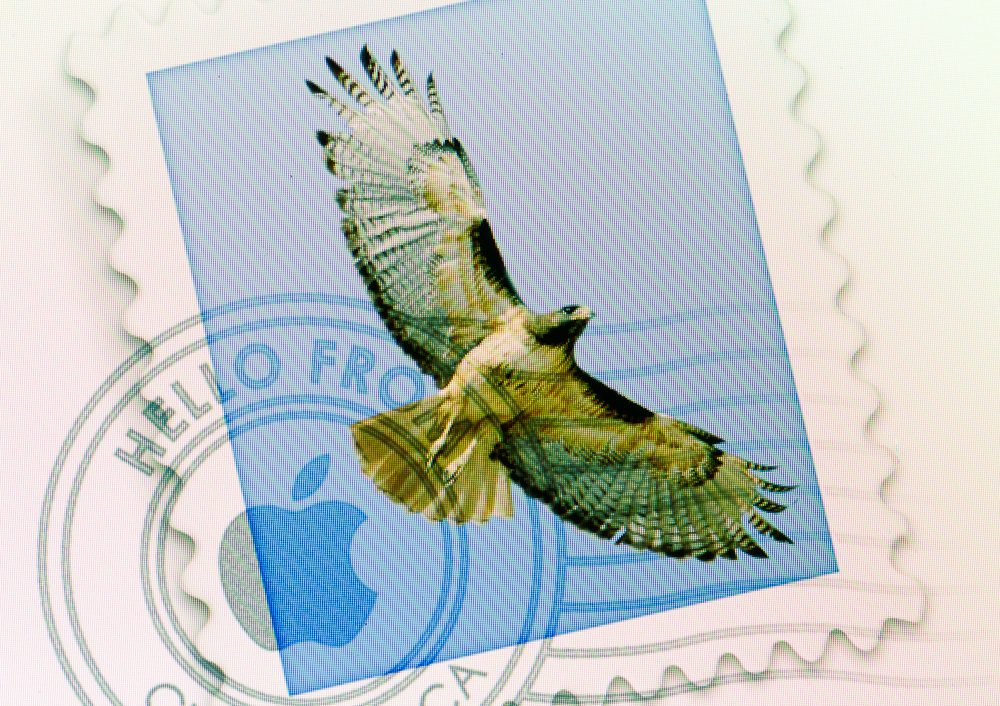
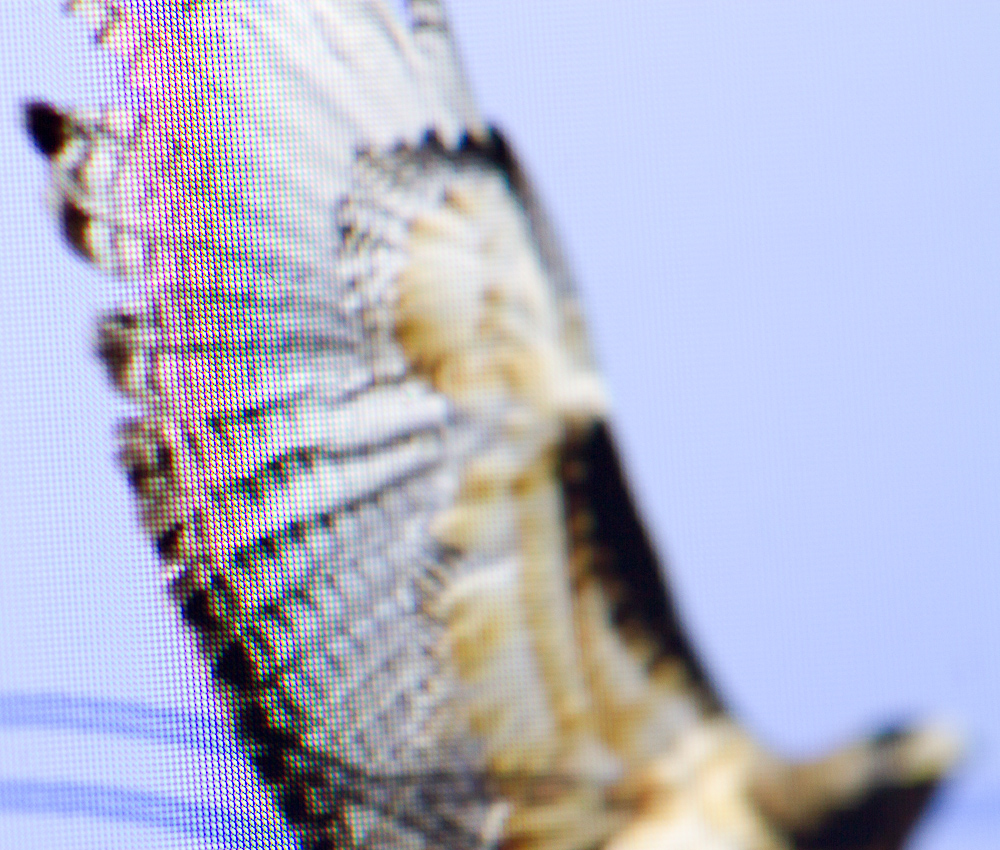
The other day, I noticed my Canon 7D with a 100mm macro lens on it sitting right beside my MacBook Pro with a Retina display, so I decided to see what 220 pixels per inch looks like blown up. The photographs below compare the same icons and text on a Retina display versus the display on an 11″ MacBook Air.

Click on any of the images to see it at twice the size (note that the images are 1,000 pixels wide and 220 PPI, so they look awesome on a retina display, but they may also take a few seconds to load).

text_air_large

Text on an 11″ MacBook Air.

text_retina_large

Text on a MBP Retina. Much sharper.

mail_air_large

The Mail.app icon on a standard display.

mail_retina_large

The Mail.app icon on a retina display. If your monitor is clean and you look really closely, you can see a few dead pixels.

wing_air_large

A close-up of the Mail.app icon on a standard display.

wing_retina_large

A close-up of the Mail.app icon on a retina display.

menubar_large

The menu bar on a retina display. Notice how the updated icons look great, and those that haven’t been updated yet look like crap. Unfortunately, this is what most of the internet looks like (with the exception of text, which looks great).

burnin_large

The dreaded ghosting issue. You can also see several pixels misbehaving in this photo (top center).

twitter_large

The one curious exception to text looking almost universally better on the retina display is the Twitter application. For some reason, the text looks as bad as the scaled-up profile pictures.

mac_stack_1_large

mac_stack_2_large

mac_stack_3_large

Genetic Data Storage Technology From Containment Becomes a Reality

dna

In my novel Containment, I write about a computer scientist (Arik) and a biologist (Cadie) who work together on a project to use human DNA as a general data storage medium. They call the project ODSTAR for Organic Data Storage and Retrieval, and the first big piece of data they store and successfully retrieve is an image of earth known as The Blue Marble (one of the most famous photographs in history taken by the crew of Apollo 17). Their ODSTAR technology eventually gets used to store critical research which they discover can actually get passed down to future generations.

As was the case with artificial photosynthesis and the proposal to use light pollution from distant worlds to detect the existence of extraterrestrials, technology proposed in Containment has again become a reality. Researchers at Harvard University encoded a 53,426-word book into DNA and then decoded it again with an error rate of only ten bits total.

If you have a subscription to the journal Science, you can read the paper here. Otherwise, you can find more details on Mashable. And, of course, you can find Containment on Amazon.